
Low Erucic Acid Rapeseed Oil (LEAR): The Safety and Quality Standards Explained
July 21, 2026
Low Erucic Acid Rapeseed Oil (LEAR): Safety, Quality Standards, and Global Compliance
In the global edible oil trade, rapeseed oil is widely appreciated for its balanced fatty acid profile, high smoke point, and versatile culinary applications. However, when sourcing rapeseed oil for food manufacturing or retail distribution, international buyers frequently encounter the term LEAR (Low Erucic Acid Rapeseed Oil).
Understanding what LEAR is—and why control over erucic acid levels is critical—is essential for procurement managers who must meet strict national food safety regulations and satisfy consumer demand for safe, nutritious cooking oils.
This article provides a comprehensive overview of Low Erucic Acid Rapeseed Oil, key international quality standards, and what food processors should evaluate when selecting a supplier.
What Is Low Erucic Acid Rapeseed Oil (LEAR)?
Traditional, wild varieties of rapeseed oil naturally contained high concentrations of erucic acid—a monounsaturated omega-9 fatty acid ($22:1$). High dietary intake of erucic acid has been linked in animal studies to myocardial lipidosis (fat accumulation in heart tissues).
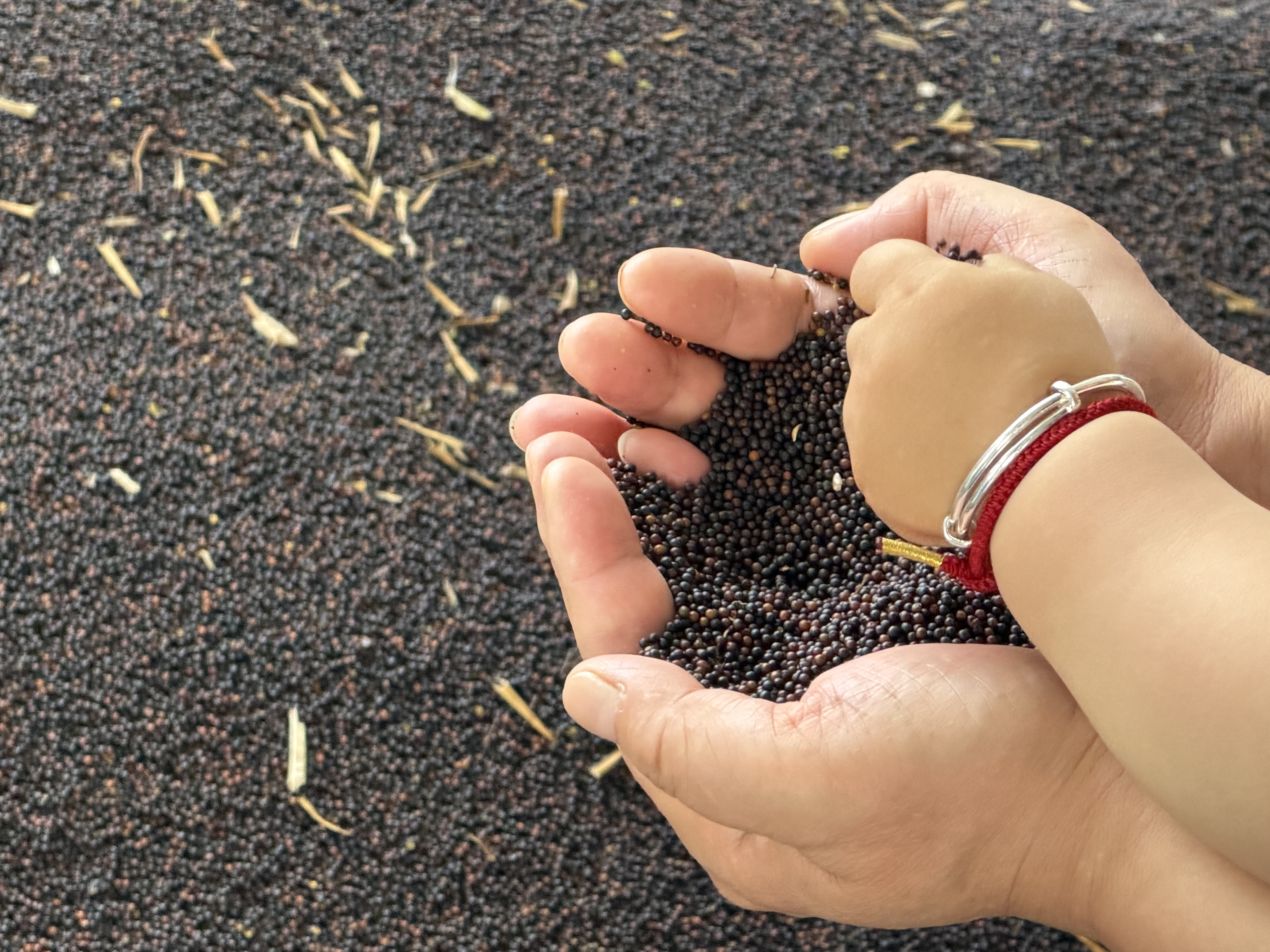
To make rapeseed oil safe and ideal for widespread human consumption, plant breeders developed low-erucic cultivars (often commercially referred to as Canola in North America or LEAR in international industrial specifications).
To qualify as Low Erucic Acid Rapeseed Oil (LEAR) under international Codex Alimentarius standards, the oil's fatty acid profile must contain:
Erucic Acid Content: Less than 2.0% of total fatty acids (with many strict international markets enforcing limits below 1.0% or 0.4%).
Glucosinolates: Minimal levels in the meal residue to ensure safe byproduct utilization.
Key International Regulatory Standards for LEAR
Food safety authorities around the world enforce stringent threshold limits on erucic acid content in refined edible oils and food products:
Codex Alimentarius (CXS 210-1999): Defines low-erucic acid rapeseed oil as having an erucic acid level of not more than 2.0% of total fatty acids.
European Union (EU Regulation 2019/1781): Sets maximum levels of erucic acid at 20.0 g/kg (2.0%) for general vegetable oils, and a stricter limit of 4.0 g/kg (0.4%) for infant formula and follow-on formula.
US FDA / Health Canada: Regulates canola/LEAR oil under strict GRAS (Generally Recognized as Safe) guidelines with similar low-erucic thresholds.
For importers and distributors, verifying compliance with these standards is mandatory to avoid customs rejections or legal compliance issues in destination markets.
Nutritional & Functional Advantages of Refined LEAR
Beyond its proven safety profile, LEAR is regarded as one of the healthiest and most functional vegetable oils available for industrial food production:
Heart-Healthy Fatty Acid Balance: High in monounsaturated fats (Oleic Acid, $\sim60\%$) and contains an optimal ratio of Omega-6 to Omega-3 fatty acids ($\sim2:1$).
High Thermal Stability: Refined LEAR boasts a high smoke point ($\sim230^\circ\text{C}$ / $446^\circ\text{F}$), making it excellent for baking, light frying, and general food processing.
Neutral Sensory Profile: Undergoes thorough refining, bleaching, and deodorization (RBD) to yield a mild flavor and light color that will not overpower finished food products.
Essential Quality Parameters in a Certificate of Analysis (COA)
When evaluating bulk LEAR shipments, procurement teams should review the following key indicators on the supplier's Certificate of Analysis:
Quality Parameter | Standard Requirement (Refined LEAR) | Significance |
Erucic Acid Content | Max 1.0% – 2.0% | Guarantees compliance with international health standards |
Free Fatty Acids (FFA) | Max 0.10% | Measures oil freshness and refining quality |
Peroxide Value (PV) | Max 2.0–5.0 meq/kg | Indicates low initial oxidation level |
Moisture & Impurities | Max 0.05% – 0.10% | Prevents hydrolytic degradation during storage |
Color (Lovibond) | Light Yellow | Ensures clean visual appeal |
Why Partner with HOWFUN OIL for LEAR Sourcing?
At HOWFUN OIL, we prioritize product safety, regulatory compliance, and consistent quality management across our supply chain.
When you source Low Erucic Acid Rapeseed Oil from HOWFUN OIL, you benefit from:
Strict Safety Verification: Every batch is rigorously tested by accredited laboratories to guarantee full compliance with Codex and destination-market erucic acid limits.
Comprehensive Export Documentation: Complete shipment documentation, including COA, Certificate of Origin, Phytosanitary Certificate, and Health Certificates for seamless customs clearance.
Flexible Bulk & Packaging Options: Supplied in Flexitanks for large-scale industrial processors, as well as IBC tanks, steel drums, and retail PET packaging.
Dependable International Logistics: Professional shipping support ensures product integrity from refinery to destination port.
Conclusion
Low Erucic Acid Rapeseed Oil (LEAR) represents a safe, highly functional, and cost-effective edible oil solution for global food manufacturers. By prioritizing strict erucic acid limits and verifying quality indicators through reliable testing, procurement teams can protect both consumer health and brand integrity.
Need compliant, high-spec LEAR oil for your manufacturing or distribution business?
Contact the HOWFUN OIL export team today for technical specifications, COAs, and customized quotation options.
Get a Quote
Fill out the form below and we'll get back to you within 24 hours